

Time Management – Productivity Hacks for Students & Professionals
Time is the most valuable resource we have, yet many people struggle to manage it effectively. Students often juggle studies, exams, and personal life, while professionals balance work, meetings, and family responsibilities. Without proper time management, both groups can feel stressed, overwhelmed, and unproductive.
The good news is that with the right strategies, anyone can take control of their time and boost productivity. In this article, we’ll explore the importance of time management and share practical productivity hacks that work for both students and professionals.
Why Time Management Matters
- Reduces Stress – Having a clear plan avoids last-minute panic.
- Increases Productivity – You get more done in less time.
- Improves Focus – Prioritization ensures important tasks come first.
- Creates Work-Life Balance – Proper time allocation allows space for rest and leisure.
- Achieves Goals Faster – Consistent effort leads to long-term success.
Whether you’re a student preparing for exams or a professional meeting deadlines, time management is the foundation of success.
Productivity Hacks for Students
1. Use the Pomodoro Technique
Break study time into 25-minute focused sessions, followed by a 5-minute break. After four rounds, take a longer 15–20 minute break. This method prevents burnout and keeps concentration high.
2. Prioritize Tasks with the Eisenhower Matrix
Divide tasks into four categories: urgent-important, important-not urgent, urgent-not important, and not urgent-not important. Focus on urgent-important tasks first.
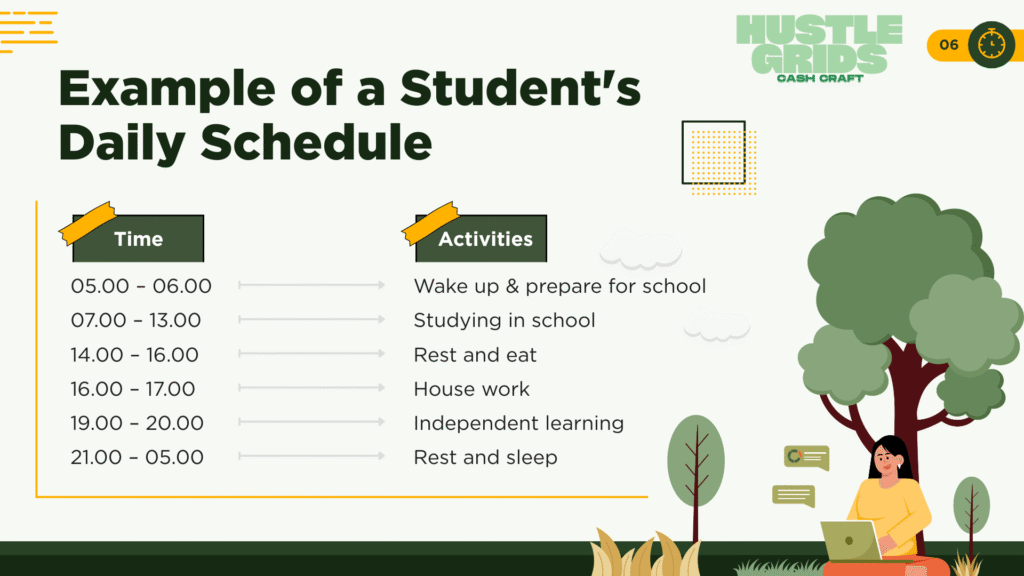
3. Create a Study Schedule
Block out specific times for subjects and assignments. Consistency reduces procrastination and ensures balanced study across topics.
4. Eliminate Distractions
Turn off social media notifications and use apps like Forest or StayFocusd to limit distractions during study hours.
5. Review and Revise Regularly
Instead of last-minute cramming, review notes weekly. This improves long-term retention and reduces exam stress.
Example: A student preparing for math and history exams can schedule alternating study sessions with Pomodoro, ensuring focused learning without fatigue.
Productivity Hacks for Professionals
1. Plan Your Day the Night Before
Before going to bed, write down the top 3–5 tasks for the next day. Waking up with a clear plan eliminates wasted time deciding what to do first.
2. Follow the 80/20 Rule (Pareto Principle)
Focus on the 20% of tasks that bring 80% of results. For example, prioritize client projects that generate revenue over tasks with little impact.
3. Time Blocking
Divide your workday into blocks for specific tasks: emails, meetings, deep work, and breaks. This prevents multitasking and improves focus.
4. Automate and Delegate
Use tools like Trello, Asana, or Slack to automate repetitive tasks. Delegate tasks that others can handle, so you can focus on higher-value work.
5. Take Regular Breaks
Long hours don’t equal productivity. Short breaks refresh the mind and boost creativity.
Example: A professional marketer might block mornings for creative work (campaign planning) and afternoons for meetings, ensuring maximum energy for critical tasks.
Productivity Hacks for Both Students & Professionals
- Set SMART Goals – Goals should be Specific, Measurable, Achievable, Relevant, and Time-bound.
- Use Digital Tools – Apps like Google Calendar, Notion, or Todoist help organize schedules.
- Avoid Multitasking – Focus on one task at a time to maintain quality and efficiency.
- Follow the Two-Minute Rule – If a task takes less than two minutes, do it immediately instead of postponing.
- Maintain Healthy Habits – Good sleep, exercise, and hydration boost energy and productivity.
The Role of Mindset in Time Management
Time management is not just about tools and schedules; it’s about mindset. Procrastination often comes from fear of failure or perfectionism. Adopting a growth mindset — where mistakes are seen as learning opportunities — can reduce procrastination and increase motivation.
Additionally, practicing mindfulness helps individuals stay present and focused, rather than worrying about unfinished tasks.
Tools for Effective Time Management
- Trello / Asana – Task and project management.
- Google Calendar – Scheduling and reminders.
- Notion – All-in-one note-taking and organization.
- RescueTime – Tracks time spent on apps/websites.
- Forest App – Helps focus by gamifying productivity.
These tools can make planning easier and help you stick to your goals.
Common Mistakes to Avoid
- Overloading your to-do list with unrealistic tasks.
- Ignoring rest, which leads to burnout.
- Multitasking and reducing focus.
- Failing to review progress and adjust schedules.
Final Thoughts
Time management is not about doing more but about doing what matters most. For students, it means studying smarter, not harder. For professionals, it means prioritizing impactful tasks and avoiding burnout.
By using techniques like the Pomodoro method, time blocking, and the 80/20 rule, both students and professionals can achieve more in less time. The key is consistency — small daily improvements in managing time lead to big results over months and years.
So, whether you’re working toward top grades or business success, remember: you can’t control time, but you can control how you use it.

Leave a Reply